

Mid-Term AgriDataValue Review: Reflecting on Three Years of Progress and Looking Ahead
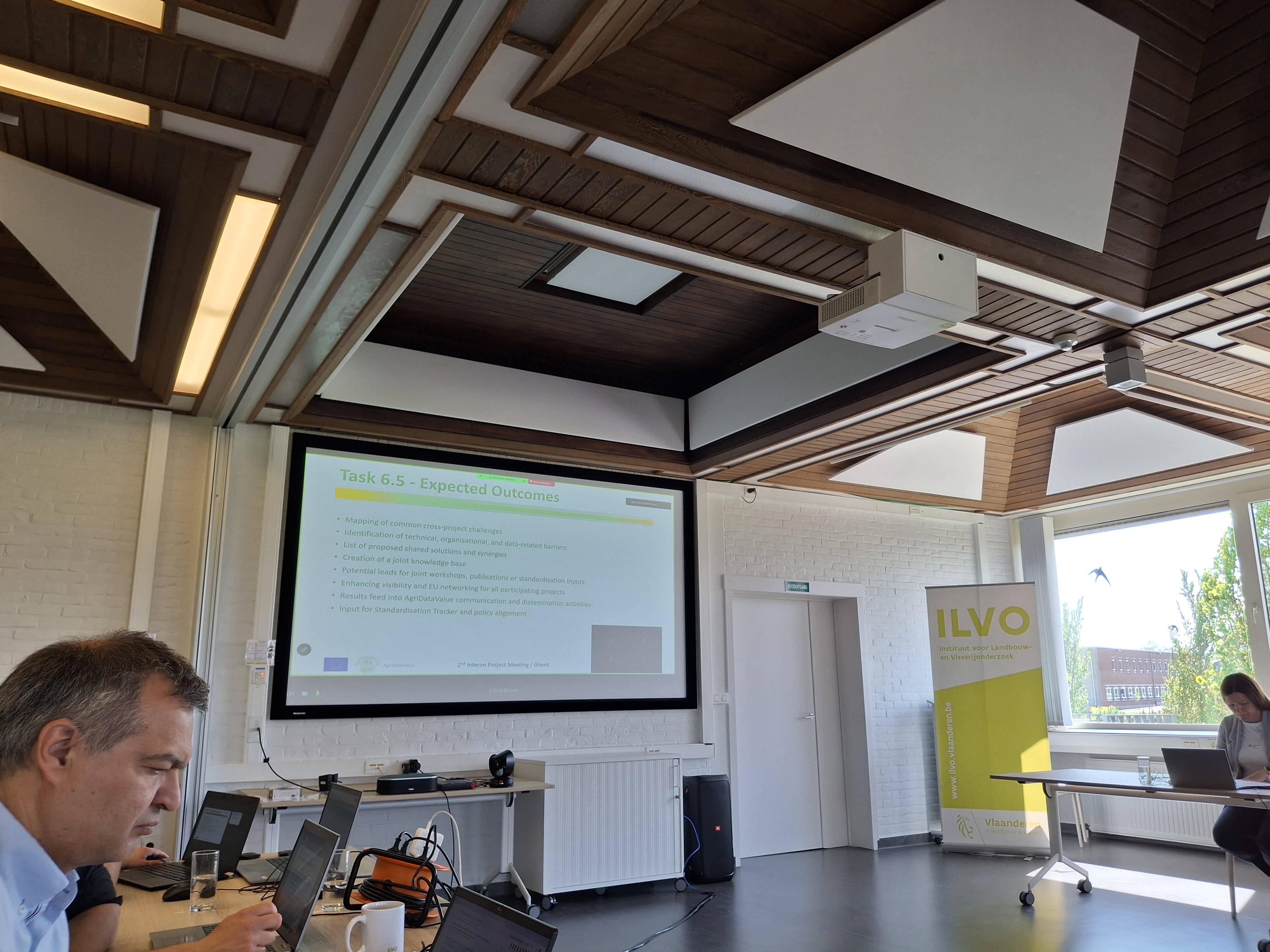
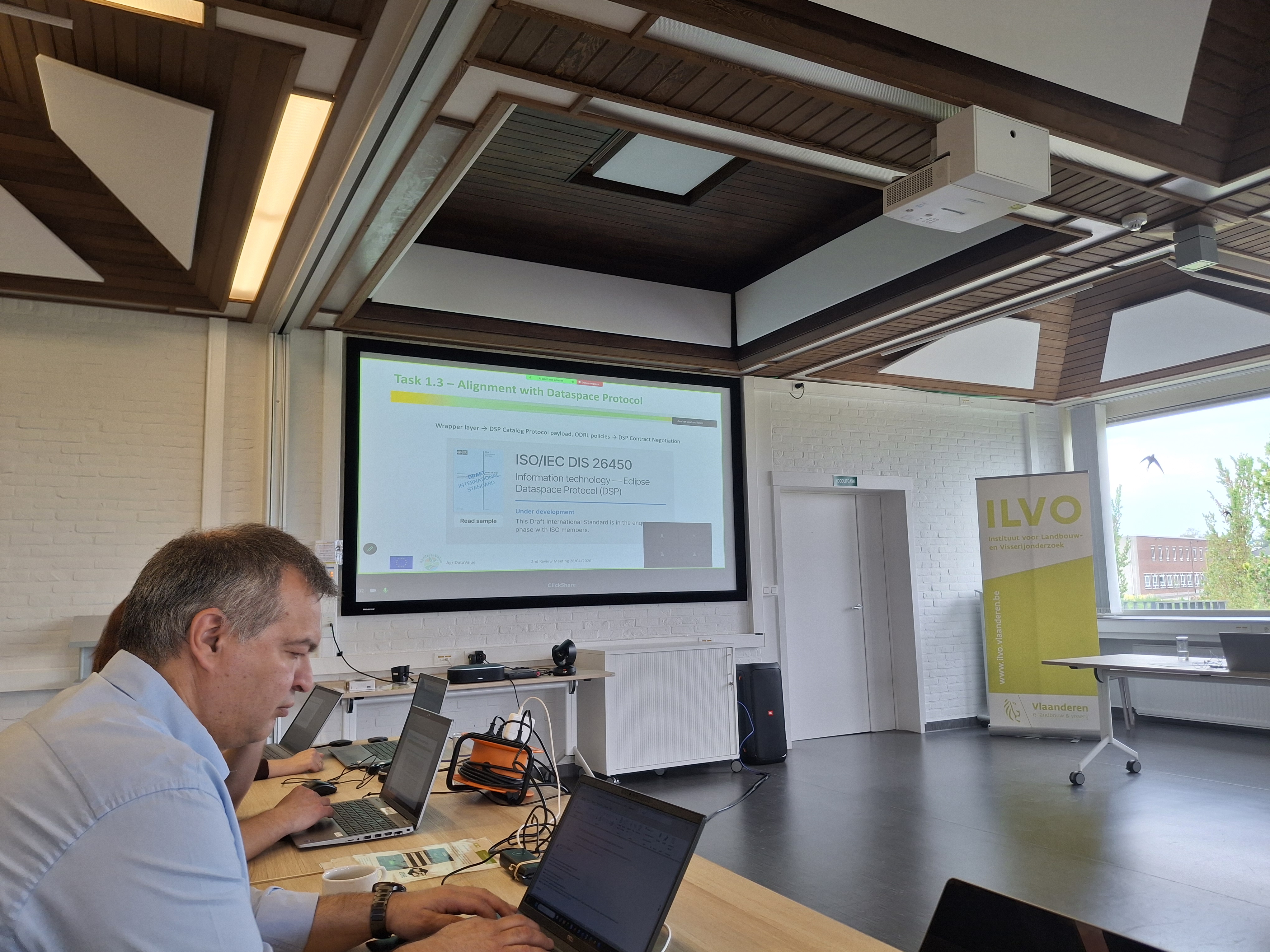
The Horizon Europe AgriDataValue (ADV) consortium recently gathered in Ghent, Belgium, for a mid-term EC review meeting dedicated to assessing the project’s implementation over its first three years and setting a clear perspective for the remaining three. The meeting marked an important transition point for the project: from building, integrating, and coordinating the foundations of a European agri-environmental data space, towards wider testing, validation, and demonstration of its value in real farming and policy contexts. National Paying Agency, Lithuania, is among the ADV consortium partners, responsible for liaison activities and project publicity.
ADV, formally titled Smart Farm and Agri-environmental Big Data Space, is funded under Horizon Europe and runs from 1 February 2023 to 31 January 2029. Its ambition is to strengthen smart farming capacities, improve competitiveness and fair income for farmers, and support agri-environmental monitoring through an innovative, open-source, multi-technology and distributed Agri-Environment Data Space.
During the Ghent review, project partners presented the main achievements of the first half of the project. These included progress in data architecture, interoperability, decentralised processing, trusted data sharing, decision-support tools, pilot preparation, stakeholder engagement, dissemination, and the alignment of technical work with real agricultural needs. A central theme was the importance of data sovereignty, traceability and trust, which are core principles of the AgriDataValue approach. The EC reviewers highlighted the complexity of the project and impressive results already achieved.
A major milestone discussed during the review was ADV “platform of platforms”, which is already in place. Built on a federated and decentralised architecture, it connects existing IoT, satellite and agri-environmental data platforms through standardised interoperability mechanisms, including AIM- and IDSA-based adapters, enabling interoperability in the data space by harmonizing data semantics and supporting trusted, controlled data exchange.
By bringing these data sources and platforms together, the “platform of platforms” provides an important technical foundation for the next phase of ADV. It supports pilot testing, interoperability, data-driven decision-support services and predictive analyses in real agricultural and policy contexts. As the project moves into its next phase, this platform will provide the technical foundation for testing services across pilots, validating data-driven solutions, and demonstrating practical benefits for farmers, advisors, researchers, public authorities and other stakeholders.
The contribution of NPA, one of the project consortium partners, was also highlighted. NPA was positively mentioned for its active performance in implementing liaison activities with other Horizon Europe sister projects and for its publicity efforts, highlighting the ADV achievements for international audience. Through these activities, NPA has supported knowledge exchange, coordination and synergies with related initiatives, helping to position AgriDataValue within the wider European digital agriculture and agri-data ecosystem. This recognition underlined the value of NPA’s role in strengthening collaboration beyond the consortium and contributing to the project’s visibility and impact at European level.
The meeting also provided an opportunity to reflect on the scale and diversity of the project’s validation environment. ADV is being tested through a broad set of pilots with their use cases across several European countries, covering different crops, livestock systems, farm types and environmental conditions. These pilots are essential for ensuring that the project’s technical solutions are not only innovative, but also practical, relevant and adaptable to real agricultural settings.
Ghent was a fitting location for this review, particularly given the project’s strong connection to Belgian research and smart livestock farming. Practical examples from the field underline the project’s broader goal: turning advanced data technologies into useful tools for farmers, advisors, researchers, paying agencies and policymakers.
Looking ahead, the consortium’s focus will increasingly shift toward field testing, validation and impact. The remaining three years will be crucial for demonstrating how ADV can support climate-smart agriculture, improve decision-making, reduce environmental pressures, and create trusted conditions for data sharing across the agri-food ecosystem. With the platform of platforms already established, the project is now well positioned to move from technical development toward broader demonstration, practical uptake and long-term exploitation.
The Ghent review meeting therefore served not only as a checkpoint, but also as a strategic moment of alignment and a kick-off of the new project phase. By bringing together technical partners, pilot leaders, agricultural experts and policy-oriented stakeholders, the consortium reinforced a shared commitment to delivering practical, scalable and trustworthy digital solutions for European agriculture. As ADV enters the second half of its journey, the project is well positioned to transform its first three years of implementation into measurable benefits for farms, data spaces and agri-environmental governance across Europe.
Last updated: 11-05-2026
Related news:
OASIS Implementation: Practical Use of EO data and AI solutions in Lithuania
Horizon Europe Sister Projects Discuss Data-Driven Tools for Sustainable Agriculture
NPA, Lithuania, showcases Its AI achievements at Panta Rhei Conference in Dublin
Strengthening Agricultural Monitoring through Innovation and Cooperation: JRC FIRE Workshop