

Vision Shared at AgriDataValue Liaison Webinar: Data Spaces and Interoperability in Agriculture
On 27 February 2026, the first Liaison Webinar for Horizon Europe sister projects brought together representatives from leading Horizom Europe (HE) and Digital Europe (DE) initiatives working at the intersection of agriculture, data spaces and digital innovation. The webinar was organised jointly by the HE AgriData Value project and one of the project consortium partners, the National Paying Agency (NPA), Lithuania. The event focused on one of the most pressing challenges in modern agriculture: data spaces and interoperability. Representatives of seven EU HE and DE initiatives took part in the event – AgriDataValue; AGRARIAN, CEADS, CODECS, OpenAgri, ScaleAgData and 4Growth. The webinar brought together around 40 online participants, proving to be of real valuefor knowledge exchange, engagement and discussion.
The first Liaison Webinar for the Horizon Europe related initiatives within the scope of the AgriDataValue project was organised jointly by its coordinators and the consortium partner, the National Paying Agency (NPA), Lithuania.
The webinar was dedicated to projects of a similar nature to introduce themselves, share experiences and common concerns, as well as discuss possible solutions to overcome challenges in achieving their planned objectives. The speakers, representing 7 Horizon Europe and Digital Europe projects, familiarised the online audience with their initiatives, highlighting the main aspects and challenges.
AgriDataValue project coordinator, CTO at Synelixis, Head of Department at NKUA, Greece, Dr Theodore Zahariadis emphasised the relevance of the event, which marks the beginning of a structured exchange among projects aiming to align efforts toward a common objective: strengthening the European agri-sector through improved data sharing, standardisation and collaboration. He highlighted the global urgency driving digital transformation in agriculture – by 2050, agricultural production must increase by 65% to meet growing food demand, while land, water and soil resources are already under severe pressure.
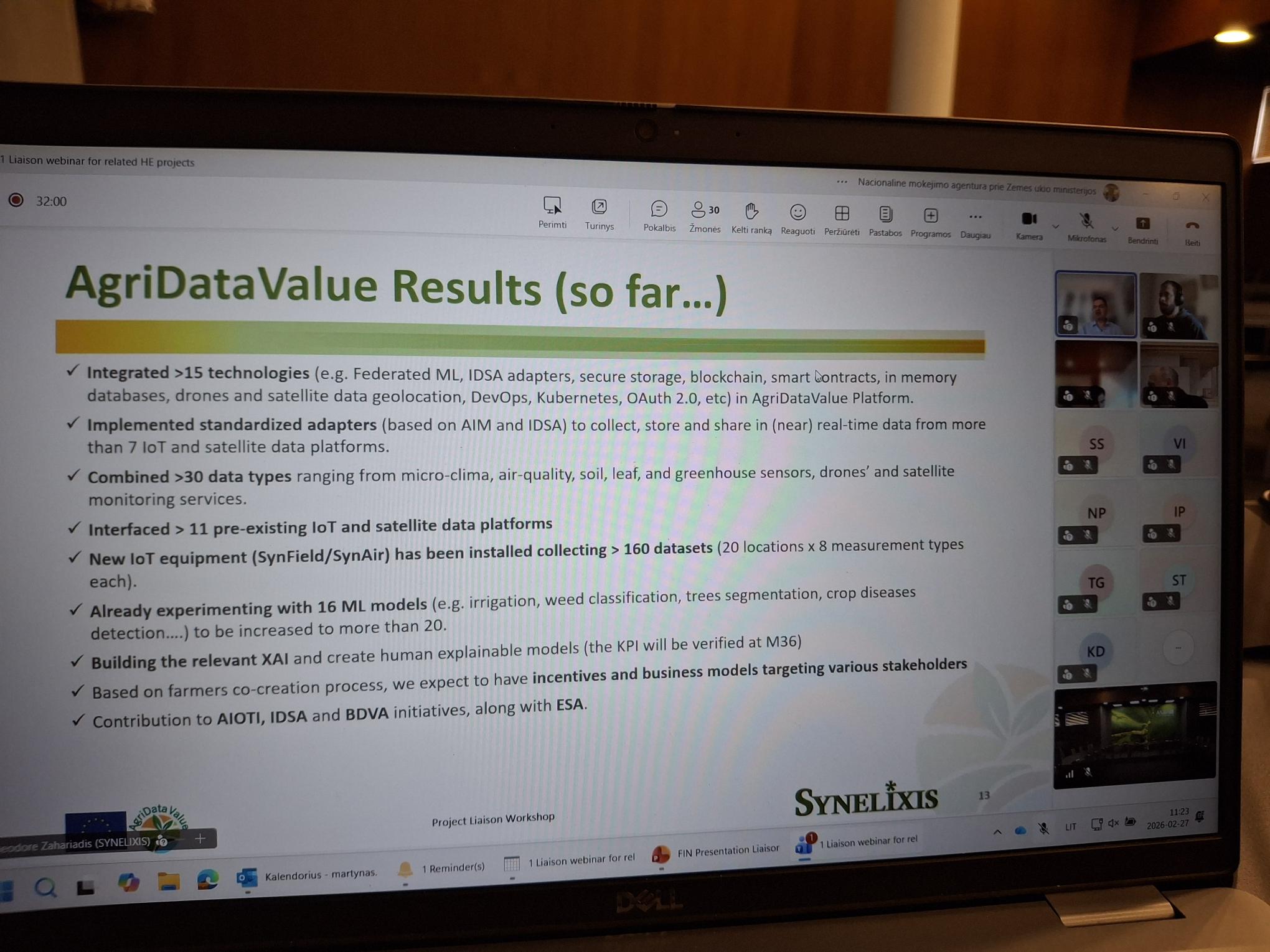
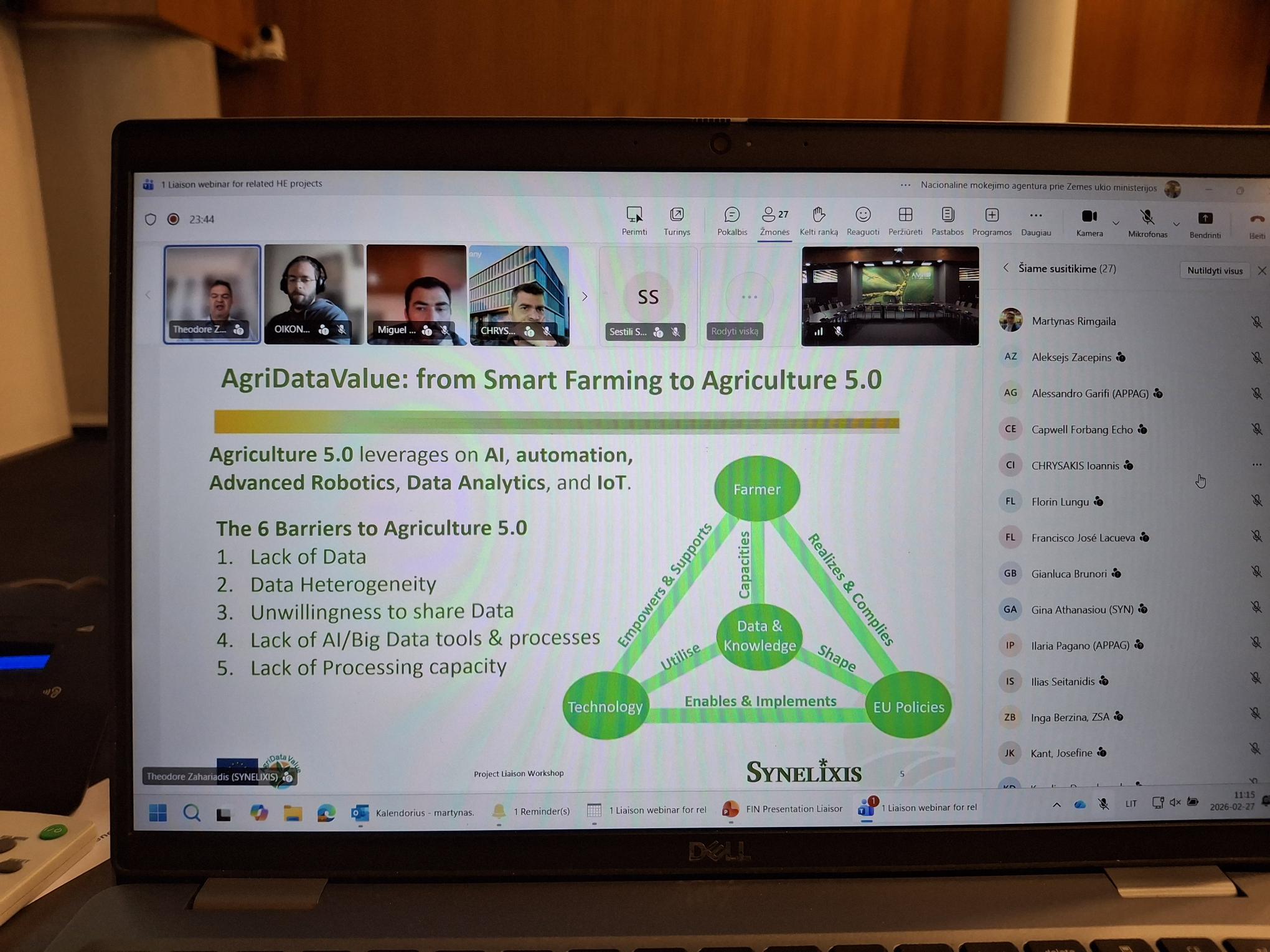
Dr. Zahariadis also gave a brief overview of the AgriDataValue project (AgriDataValue). He mentioned six major barriers standing in the way of achieving the objectives, including fragmented and heterogeneous data, limited availability of well-structured datasets for AI training; reluctance among data owners to share data; lack of advanced AI and big data tools; insufficient processing capacity in rural areas and limited trust in AI systems. To address the challenges, the project has developed a federated, distributed “platform of platforms” architecture, integrating in situ sensors, satellite data and edge/cloud AI tools. The project currently connects more than 160 datasets from 20 locations across Europe, integrating multiple IoT and satellite platforms. AgriDataValue promotes the “Agriculture 5.0” vision, leveraging artificial intelligence (AI), automation, advanced robotics, Internet of Things (IoT) technologies and data analytics to bridge farmers, technology providers and policymakers
Following the AgriDataValue presentation, other Horizon Europe and Digital Europe projects also delivered presentations on their work:
Mr Miguel Cachão, Agronomic Engineer / Technician, Winegrowers’ Association of the Setúbal Peninsula, Portugal, presented the HE AGRARIAN project (AGRARIAN presentation), which combines satellite, drone and sensor data with AI models to improve decision-making in livestock, field crops and viticulture. Notably, more than 1,500 hectares of vineyards have been integrated into digital monitoring systems. This work illustrates how integrated digital infrastructures can help translate heterogeneous agricultural data streams into actionable insights for farm management and sector-wide innovation.
Mr Capwell Forbang Echo familiarised the audience with the DE CEADS (Common European Agricultural Data Space) project (CEADS Presentation). He noted, that the project aims to harmonise national data-sharing initiatives across Member States and establish a unified governance and technical framework for agricultural data exchange. By laying the foundation for coordinated data governance, the project contributes to the broader development of trusted agricultural data spaces in Europe. The project also develops several practical use cases to demonstrate how agricultural data can be shared and used across different domains.
Project Coordinator Prof. Gianluca Brunori introduced to the audience the HE CODECS project (CODECS presentation) – the initiativeanalyses the economic, social and ecological costs and benefits of farm digitalisation, underlining that digital ecosystems and governance structures are as crucial as technological tools. The initiative therefore contributes to a better understanding of how digital transformation can be implemented in agriculture in a balanced and socially responsible manner.
Ms Tuna Coppens, Researcher / Project Manager, ILVO, Belgium, familiarised the webinar participants with the HE ScaleAgData project (ScaleAgData presentation). She pointed out that the project addresses fragmentation in agricultural sensor data, focusing on semantic harmonisation and scalable data products for environmental and policy monitoring. In this way, the project supports the creation of robust data infrastructures capable of underpinning large-scale environmental assessment and agricultural policy evaluation.
Mr Dáire Boyle, Consultant & Technical Manager of the HE project, Evenflow Consulting LTD, Belgium, presented the HE 4Growth project (4Growth presentation). He stated that the project conducts a Europe-wide market analysis of digital technology uptake in agriculture and forestry, integrating survey and macroeconomic data into forecasting models. Consequently, the project aims to generate evidence that can guide policymakers and industry stakeholders in shaping the future digital landscape of agriculture and forestry.
Mr Felipe Arruda Pontes, Postdoctoral Researcher, Institute of Data Science, Department of Advanced Computing Sciences, the Netherlands, familiarised the participants of the online event with the HE OpenAgri project (OpenAgri presentation). He indicated that the initiative develops open-source, interoperable microservices for digital farming, relying on semantic models and REST APIs to ensure compatibility, transparency and long-term sustainability. The initiative thus promotes an open technological ecosystem that can accelerate innovation while ensuring transparency and long-term accessibility of digital farming solutions.
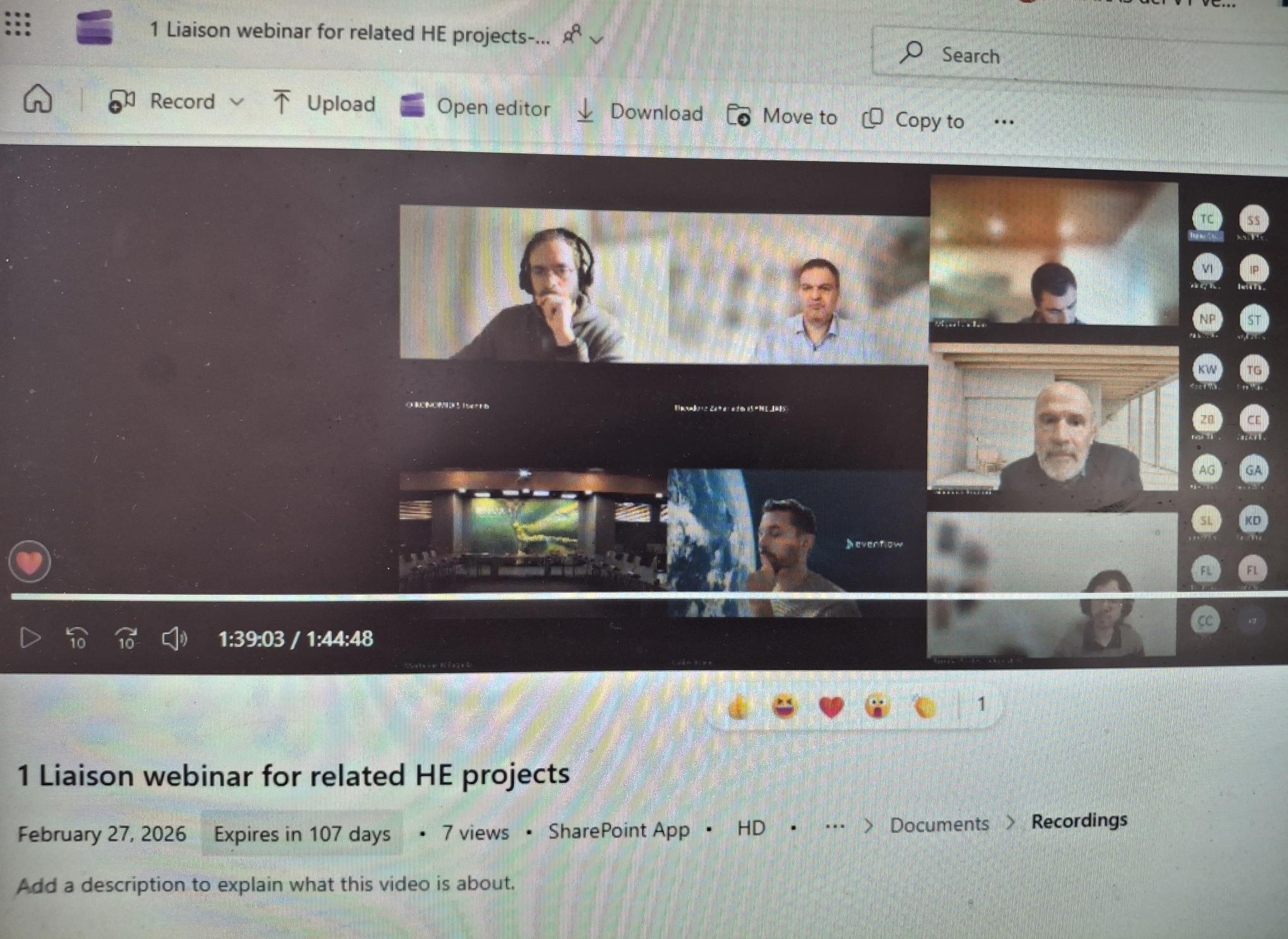
The discussion guided through by Mr Yannis Oikonomidis, the Software Engineer & Technical Manager, Netcompany Intrasoft S.A., Greece, revealed that despite different project scopes, all initiatives converged on a shared understanding: interoperability is not merely a technical issue, but also one of governance, trust, sustainability and usability. Despite a wide diversity of projects, they all are facing common challenges. The webinar concluded with a strong commitment to continued cooperation. The event was the first of six liaison webinars which will be organised during 2026. The online events will focus on the following topics: precision agriculture and decision support systems (DSS), sustainability and climate, livestock and monitoring, food systems and behaviour, and robotics and sensing.
This liaison activity marked the beginning of sustained collaboration among projects working to ensure that digital agriculture technologies effectively reach farmers across Europe.
Last updated: 13-03-2026
Related news:
OASIS Implementation: Practical Use of EO data and AI solutions in Lithuania
Horizon Europe Sister Projects Discuss Data-Driven Tools for Sustainable Agriculture
NPA, Lithuania, showcases Its AI achievements at Panta Rhei Conference in Dublin
Mid-Term AgriDataValue Review: Reflecting on Three Years of Progress and Looking Ahead